Physical Address
304 North Cardinal St.
Dorchester Center, MA 02124
Physical Address
304 North Cardinal St.
Dorchester Center, MA 02124
The promise of generative AI in the agency space was originally sold as a massive reduction in “time to first draft.” We were told that the days of scouring stock photo libraries or spending hours on mood boards were over. While that is partially true, a dangerous habit has formed among creative teams: prioritizing the speed of the initial generation over the control of the final output. This “speed-first” mentality often results in a visual output that is 90% of the way there, but that final 10% contains the “uncanny valley” artifacts or structural inconsistencies that alienate a high-end client.
When an agency relies solely on a “prompt-and-pray” methodology, they are not actually saving time. They are merely shifting the labor from the creation phase to the revision phase. This is where most AI workflows break down. By treating models like Nano Banana as “vending machines” for finished assets rather than high-fidelity engines for raw material, teams invite brand drift and repetitive revision cycles that eat into their billable margins.
In a fast-paced agency environment, the pressure to deliver “good enough” assets can be overwhelming. When a creative lead puts a complex prompt into an AI generator and gets back a stunning, albeit slightly flawed, image, the temptation is to keep “re-rolling” the prompt to fix the errors. This is the first major mistake. Re-rolling is a gamble; you might fix the extra finger or the weird lighting, but you will almost certainly lose the specific composition or lighting you liked in the first version.
The hidden time-sink in these workflows isn’t the generation itself—it’s the manual cleanup. If an operator saves five minutes by using a generic, one-shot prompt, but then spends five hours in traditional software trying to fix a localized anatomical error or a texture smudge, the efficiency of the AI has been neutralized.
Furthermore, speed-focused outputs often suffer from “brand drift.” This occurs when the AI’s internal logic for aesthetic beauty overrides the client’s specific visual identity. Without granular control over the generation process, every asset starts to look like “AI art” rather than a bespoke brand asset. The textures become too smooth, the lighting too dramatic, and the overall composition lacks the intentionality that professional photographers or designers bring to a project.
Nano Banana and the Precision Generation Framework
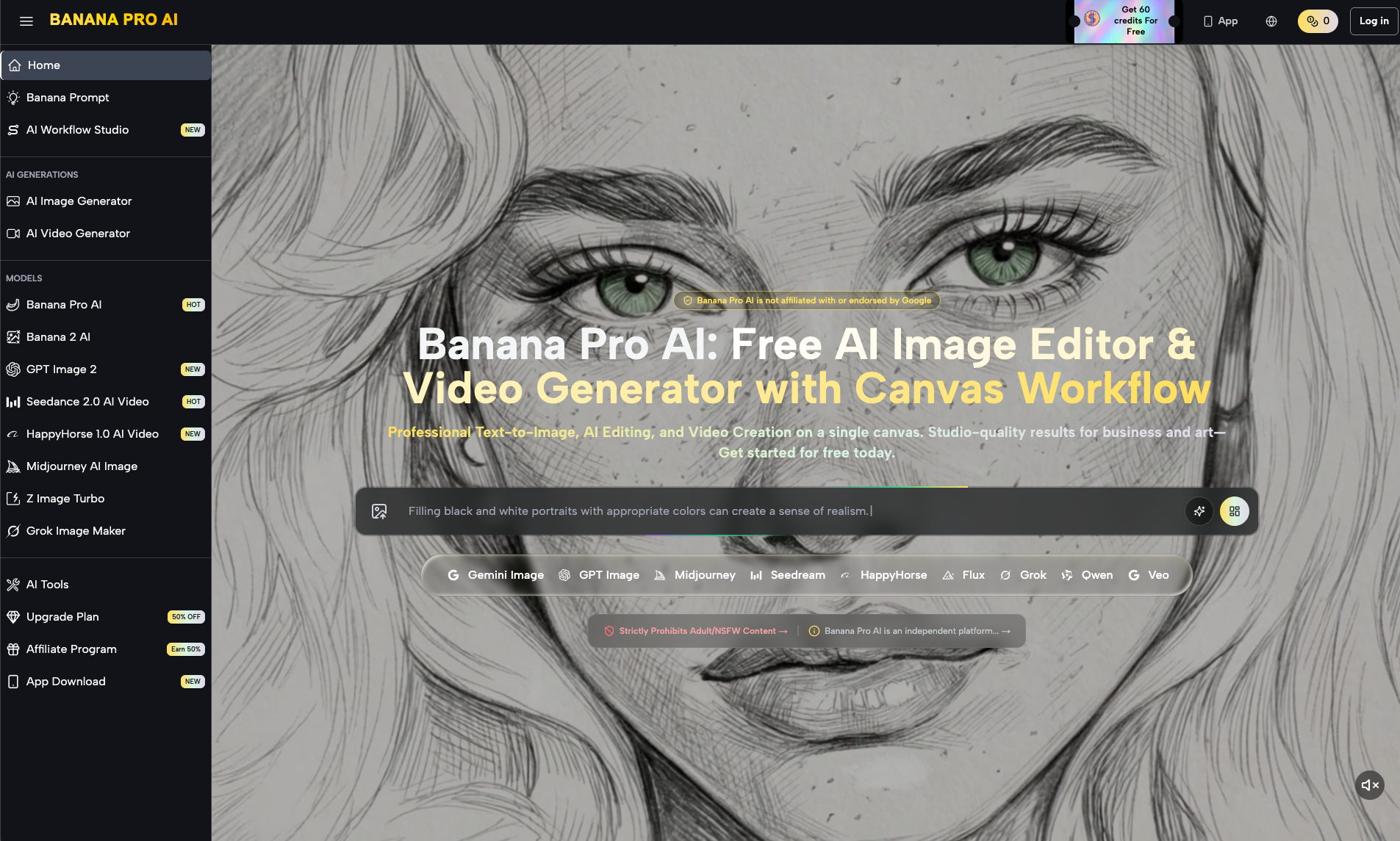
To avoid the speed trap, professional operators are moving toward what we call the “Precision Generation Framework.” This involves using a model like Nano Banana not for its ability to create a finished image in ten seconds, but for its structural consistency across multiple iterations.
The tactical advantage here is breaking a single complex prompt into three or four controlled steps. Instead of asking for “a futuristic office with a glass table, blue lighting, and a woman drinking coffee,” a controlled workflow starts with the architectural structure. Once the perspective and geometry are locked in, the operator layers in lighting, and finally, the specific subjects and textures.
This iterative approach allows an agency to set internal benchmarks for when a generation is “ready” for the next stage. If the structural layout is correct but the lighting is off, you don’t throw away the whole image. You use the tools within Banana AI to refine the specific layer that failed. By decoupling the elements of a scene, you gain the ability to replicate a specific “look” across an entire campaign—something that is nearly impossible with a high-speed, one-shot prompt approach.
One of the most significant shifts in professional AI creative work is the move away from the generation tool and toward the AI Photo Editor as the primary workspace. In a high-control workflow, the generation is just the base coat of paint. The actual creative work happens during the “surgical editing” phase.
When a localized error occurs—perhaps a lighting inconsistency on a product’s surface or a strangely rendered texture in the background—the least efficient move is to re-generate. Instead, utilizing a dedicated AI Photo Editor allows the operator to mask out the problem area and apply a targeted correction. This preserves 95% of the image that the client has already approved while resolving the “uncanny valley” elements that would otherwise trigger a rejection.
Consider a case study where an agency is producing a series of lifestyle images for a luxury watch brand. A raw generation might produce a perfect environment and a great model, but the watch itself might look like a generic metal blob. In a speed-first workflow, the team would keep re-rolling, hoping the AI eventually “gets” the watch right. In a control-first workflow, the team takes the best model/environment output and uses an AI Image Editor to refine the watch area specifically, or even composites in a high-res 3D render of the actual product. This surgical approach ensures the product—the most important part of the asset—is technically accurate.
It seems counterintuitive, but slowing down the initial generation phase actually leads to faster delivery over the life of a project. When you have control, you have predictability. Predictability is the only way to scale an agency’s production.
Standardizing the handoff between the AI operator and the traditional Creative Director is essential. A Creative Director shouldn’t be looking at 50 “nearly there” options. They should be looking at three highly controlled assets that have already been through a refinement pass in an AI Image Editor. By building a “safety net” into the workflow—where assets are flagged for low-control issues (like lighting mismatches or perspective errors) before they ever reach a stakeholder—the agency protects its reputation for quality.
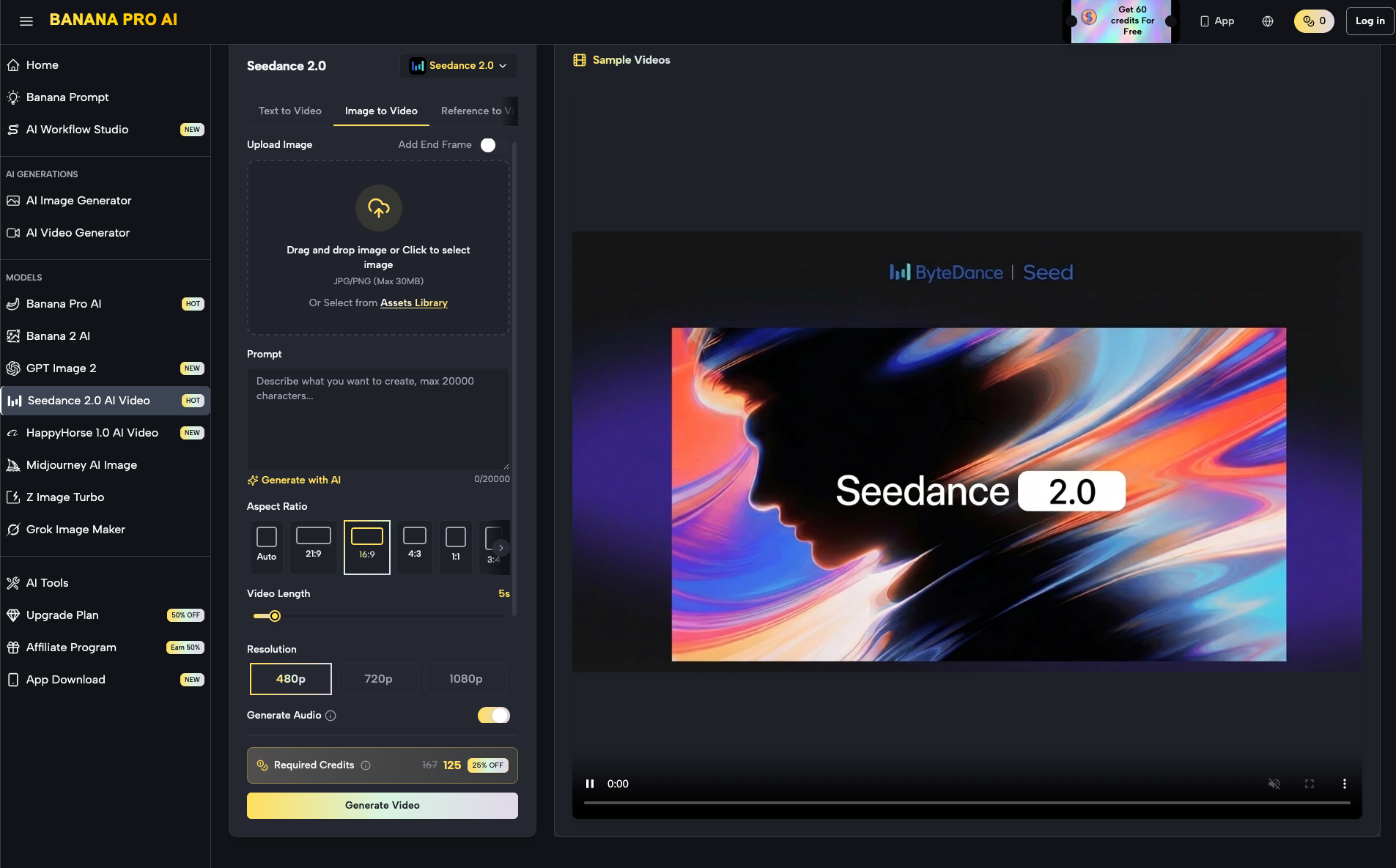
The tools within the Banana AI ecosystem allow for this decoupling. By treating the generation as a distinct step from the refinement, teams can assign different roles to different specialists. You might have a “prompter” who excels at structural layout and an “editor” who excels at using the AI Photo Editor to fix anatomy and lighting. This division of labor is how professional studios have always worked; generative AI shouldn’t change that fundamental structure.
While we are seeing incredible strides in what these tools can do, it is vital to maintain a level of skepticism regarding “fully automated” pipelines. There is a persistent uncertainty in how generative models handle specific brand-restricted color palettes (like a very specific PANTONE shade) without significant manual intervention. We have found that even with advanced prompting, the model’s inherent “training bias” toward popular aesthetics can make achieving a truly unique, niche brand look difficult.
Furthermore, we must acknowledge the reality of “phantom artifacts.” These are tiny, pixel-level inconsistencies that might look fine on a 27-inch monitor but become glaringly obvious when the asset is scaled up for large-format print or 4K video. Current AI workflows are not yet “hands-off” for high-stakes, large-scale brand campaigns. There is a hard ceiling where the human eye—trained in traditional photography and color theory—must take over.
We cannot yet conclude that AI can replace the final “technical director” check in a professional pipeline. The expectation that a model can handle 100% of the production without a human editor “cleaning the plates” is a recipe for client dissatisfaction.
In the end, the agencies that thrive won’t be the ones that generate the most images per hour. They will be the ones that use tools like Banana AI to produce the most usable assets per hour. Control is not an obstacle to speed; it is the foundation of it. By moving beyond the one-click trap and embracing a workflow built on surgical editing and structural consistency, agencies can finally deliver on the promise of generative media without sacrificing the quality that their clients pay for.