Physical Address
304 North Cardinal St.
Dorchester Center, MA 02124
Physical Address
304 North Cardinal St.
Dorchester Center, MA 02124
A performance marketing lead for a high-growth D2C brand recently shared a frustrating bottleneck: their team had successfully integrated generative AI to produce 500 new ad variants a week, but their creative win rate had plummeted. The problem wasn’t the volume; it was the “hallucination debt.” For every ten images generated, seven had minor brand inconsistencies, two had structural errors, and the one “usable” asset still required forty minutes of manual retouching to meet brand standards.
The promise of generative AI has largely focused on speed—the ability to turn a prompt into a pixel-perfect image in seconds. However, for teams operating at scale, speed without control is a liability. When workflows are optimized solely for generation volume, they often ignore the critical middle step: production-grade refinement. This is where the transition from a “generator” mindset to an AI Photo Editor mindset becomes the difference between a high-performing campaign and a waste of compute credits.
The fallacy of “faster prompts” is one of the most expensive mistakes a performance team can make. In a high-volume ad environment, the goal is not just to create an image, but to create an asset that converts. When a model generates a near-perfect lifestyle shot but hallucinations cause the product’s color to shift or the lighting to clash with the brand’s visual identity, the “speed” of the initial generation is immediately cancelled out by the friction of QA.
This creates a QA bottleneck. If a creative director has to review 100 images to find three that don’t look “uncanny,” the workflow hasn’t actually scaled; it has simply shifted the labor from creation to curation. Furthermore, the hidden cost of re-rolling—generating the same prompt over and over in hopes of a better result—is a significant drain on both time and budget. Relying on the stochastic nature of AI to eventually “get it right” is not a strategy; it is a gamble.
To break this cycle, teams must move away from full-scene regeneration and toward surgical control. Instead of discarding an asset because a background element is distracting, a robust AI Photo Editor allows a designer to keep the successful 90% of the image and fix the failing 10%. This preservation of “good pixels” is the only way to maintain brand consistency across a sprawling asset library.
The “Precision Pivot” is a fundamental change in how creative teams interact with AI. It moves the focus from the initial text-to-image prompt to the subsequent editing phase. While the industry spent the last year obsessed with prompt engineering, performance marketers are discovering that the AI Photo Editor is actually the more valuable tool in the stack.
When you use an editing-first approach, you aren’t asking the AI to guess what you want; you are instructing it on what to change. This is the difference between asking a chef to “make something delicious” and asking them to “reduce the salt in this specific sauce.” For a performance team, this means taking a baseline asset that is known to convert and using localized AI operations to adapt it.
Instead of generating a new scene for every geographic market, a team can use a localized upscaler or a face-swapping tool to adapt a single high-performing creative for different demographics. This ensures that the core composition, lighting, and “hook” of the ad—the elements that are actually driving ROAS—remain untouched while the necessary variables are swapped out with precision.
In a production environment, the most useful AI tools are those that function like a scalpel rather than a sledgehammer. Consider the common task of cleaning up a product shot. In a traditional workflow, a distracting reflection or a messy background might require hours of cloning and masking. An AI-driven Object Eraser or Background Remover turns this into a three-second task.
The true power of a modern AI Photo Editor lies in “creative branching.” This is the practice of taking a single, high-fidelity base image and creating a dozen variations through localized edits. For example:
By focusing on these surgical operations, teams reduce the variance that comes with full-scene generation. They gain predictability, which is the most undervalued currency in creative operations.
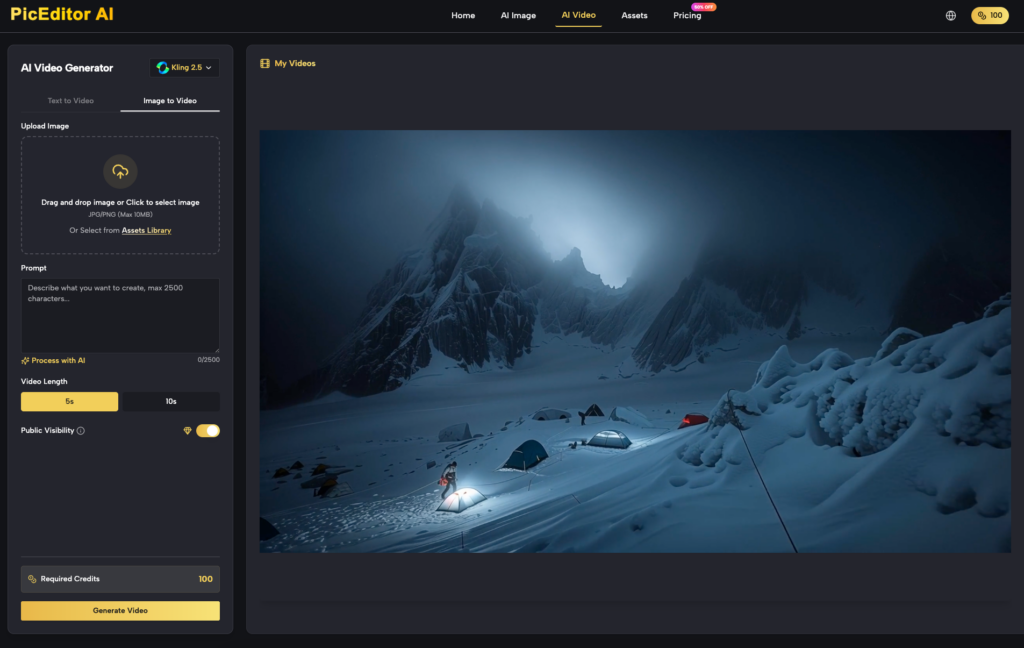
The financial argument for an editing-heavy workflow is rooted in “time-to-deploy.” In performance marketing, a delay of two days can mean missing a trend or losing ground to a competitor’s aggressive bidding. When a team uses a dedicated GPT Photo Editor to refine assets, they shorten the feedback loop between the creative director and the media buyer.
There is also a significant reduction in compute costs. Generating high-resolution, full-scene images is resource-intensive and often consumes significant credits or server time. Refining a usable asset—removing a logo, swapping a background, or adjusting a color grade—requires far less computational “heavy lifting” than asking a model to re-imagine a whole scene from scratch.
Beyond the metrics, there is a psychological benefit for the creative team. Constant re-rolling leads to “AI fatigue,” where designers feel they are fighting a black box rather than using a tool. Providing them with precise controls restores their sense of agency. They stop being prompt-typists and start being digital artists again, using the AI to execute their specific vision with a level of speed that was previously impossible.
Despite the advancements in AI Photo Editor technology, it is essential to acknowledge where the “magic” ends. We are currently in a phase where AI can fix many things, but it cannot fix everything. For instance, if an initial generation has fundamentally broken lighting—where shadows fall in three different directions—an AI upscaler or an object eraser will often struggle to harmonize the scene. In these cases, it is often faster to re-roll the base image than to attempt a manual “rescue” mission.
There is also the “plasticity” problem. Over-reliance on AI upscalers and enhancers can result in textures that look unnaturally smooth or “filtered,” which can be a conversion-killer for brands that rely on authenticity. If an image loses the human element—the subtle skin pores or the natural fabric weave—consumers subconsciously register it as “fake,” and trust is eroded. Performance teams must remain vigilant about when to lean into AI enhancement and when to leave the “raw” imperfections that make an image feel real.
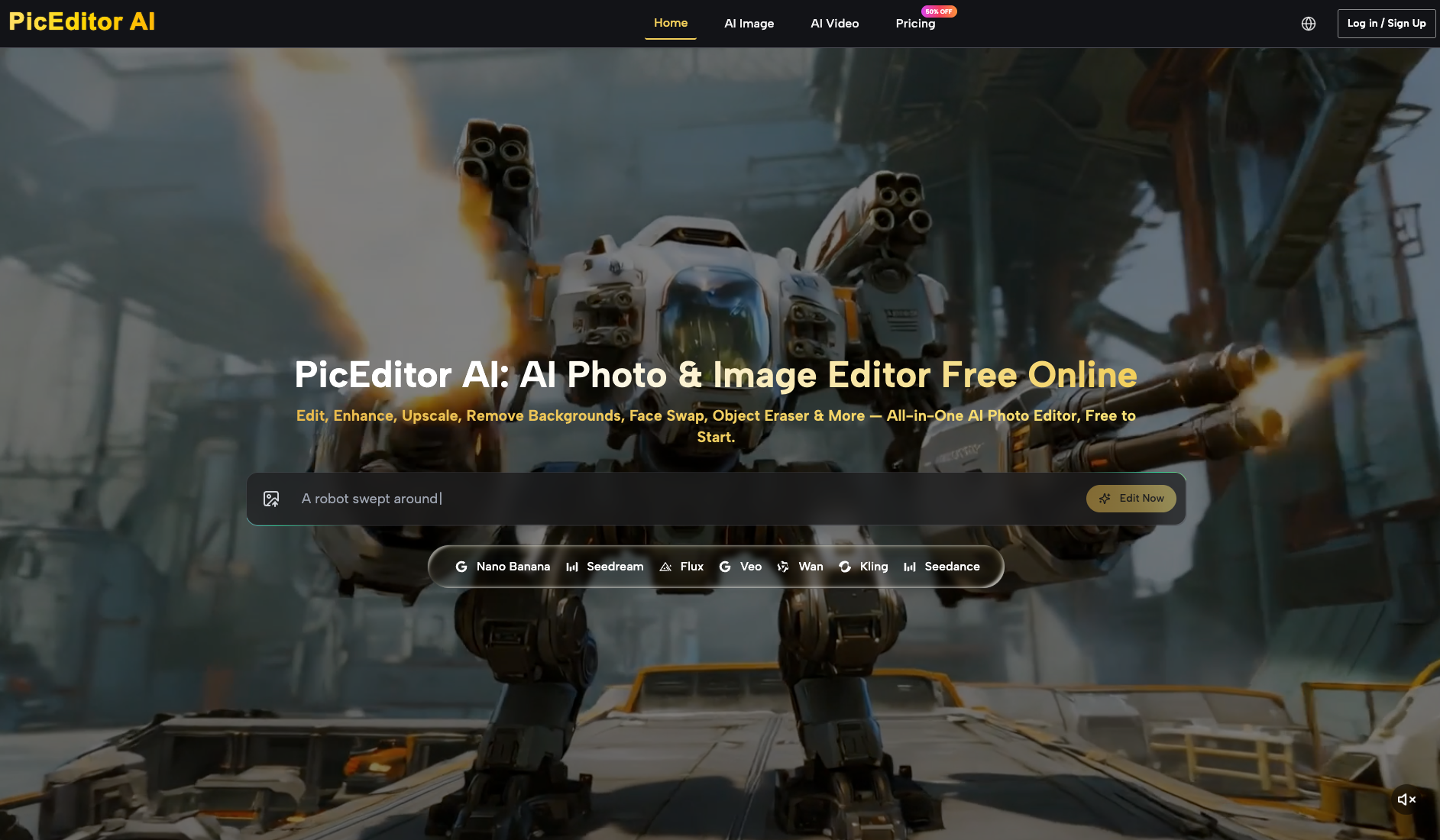
Finally, while tools like PicEditor AI provide incredible flexibility, they still require a human eye to guide the “creative branching.” AI can generate a thousand variations, but it cannot yet tell you which one will resonate with a specific audience segment’s emotional triggers. The tech is an accelerant for execution, but it remains a poor substitute for the strategic intuition of a seasoned marketer.
To successfully scale, performance teams should restructure their pipelines to prioritize control over raw output. This starts by selecting tools that offer a suite of modular editing features rather than just a “generate” button. By integrating an AI Photo Editor into the daily habit of the creative team, brands can stop the cycle of hallucination debt and start producing assets that are both high-volume and high-fidelity.
The goal isn’t just to make more ads; it’s to make more of the right ads. In the race to automate creative, the winners won’t be the ones who generate the most images—they will be the ones who can edit, refine, and deploy them with the most precision. Consistency and control are what ultimately drive performance, and in the world of AI, those are only achieved through a dedicated commitment to the editing process.